After fitting women for more than 43 years, one thing I’ve learnt is that bra sizing is rarely as simple as the number and letter on the tag.
I’ve personally fitted well over 100,000 women during my career, and I still fit women in-store every day. In my experience, around 80% of new customers who come to us are wearing the wrong bra size, and one of the most common problems is a bra that is simply too small.
A bra size has two main parts: the band size and the cup size. The band relates to the size around your ribcage, while the cup reflects the volume needed to comfortably contain and support your bust.
But your bra size should only ever be a starting point. The most important thing is how the bra actually fits.
Band size: the foundation of support
The band is the part of the bra that wraps around your ribcage, and it should provide most of the bra’s support.
I look for a band that feels firm and secure, but not painfully tight. It should sit level around the body rather than riding up at the back.
A lot of women assume the shoulder straps are responsible for lift and support, but the band should be doing most of the work. If you are constantly tightening the straps to create more lift, it may be a sign that the band is too loose or the bra simply isn’t the right fit.
Comfort matters just as much as the technical fit. A bra can look right on paper, but if the wearer is uncomfortable in it, it isn’t the right bra for her.
Cup size: volume, not just “big” or “small”
Cup sizes are probably the most misunderstood part of bra sizing.
One thing that regularly surprises women is how far cup sizes actually go. At Illusions Lingerie, we stock bras up to a K cup.
Sometimes customers are shocked when I recommend a larger cup than they expected, but I always tell them not to worry about the letter on the tag.
A cup size isn’t a judgement about whether someone has a “big” or “small” bust. It is simply part of a sizing system.
A D cup is also not the same volume across every band size. For example, a 10D and a 16D do not contain the same breast volume because cup size changes in proportion to the band.
That is also where the idea of sister sizes comes from. Sister sizes have similar cup volumes but different band lengths. For example, moving up in the band and down in the cup can sometimes provide a similar cup volume.
Sister sizing can be useful when your options are limited, but it isn’t something I rely on heavily when fitting. With more than 10,000 bras in store, we usually have enough options to focus on finding the bra that fits the woman rather than trying to make the woman fit the bra.
What does a properly fitted bra look like?
After 43 years, bra fitting has become second nature to me.
I rarely use a tape measure. I usually make a visual assessment, choose a size based on experience and then make adjustments depending on how that particular bra fits.
I’m looking for the bust to be completely and comfortably contained within the cups, with no spilling or obvious gaping. The band should feel firm without being painfully tight, and the straps should sit comfortably without digging into the shoulders.
I also look at the overall shape the bra creates under clothing.
And, of course, I look at the customer. When someone stands taller, looks in the mirror and smiles, that’s usually a pretty good sign we’ve found the right bra.
Why can your bra size change?
Your bra size is not fixed for life.
Pregnancy, breastfeeding, weight changes, hormonal changes, ageing, surgery, medication and changes in exercise or lifestyle can all affect your bra fit.
But even if your body hasn’t changed, your size can still vary between bras.
Different brands and styles use different cup shapes, wire widths, fabrics, stretch and levels of coverage. Even different colours in the same style can sometimes fit slightly differently due to the dyeing process.
It is completely normal for a woman to leave our store with several bras in different sizes.
That is why I encourage women not to become too attached to saying, “I’m a 12D” or “I’m a 14E.”
You might be one size in one bra and another size in the next.
The right size is the size that fits you properly in that particular bra.

Signs your bra may not fit properly
Many women get so used to wearing an uncomfortable bra that they assume discomfort is normal - It shouldn’t be.
Common signs of a poor fit include cups that gape, breast tissue spilling over the cup, straps digging into the shoulders, straps constantly falling down, wires digging in, or the band riding up at the back.
And if you spend all day looking forward to taking your bra off, it may be time to have the fit checked.
One of my favourite parts of fitting is seeing the difference the right bra can make.
Sometimes a woman comes in wearing a terribly fitted bra and feeling unhappy with the way her clothes sit. We put her into something that properly lifts and supports her, and suddenly she has a completely different silhouette.
The reaction can be wonderful. They are often shocked by how good they can look and feel in the right bra.
It's the best form of shopping therapy!
The best way to find your bra size
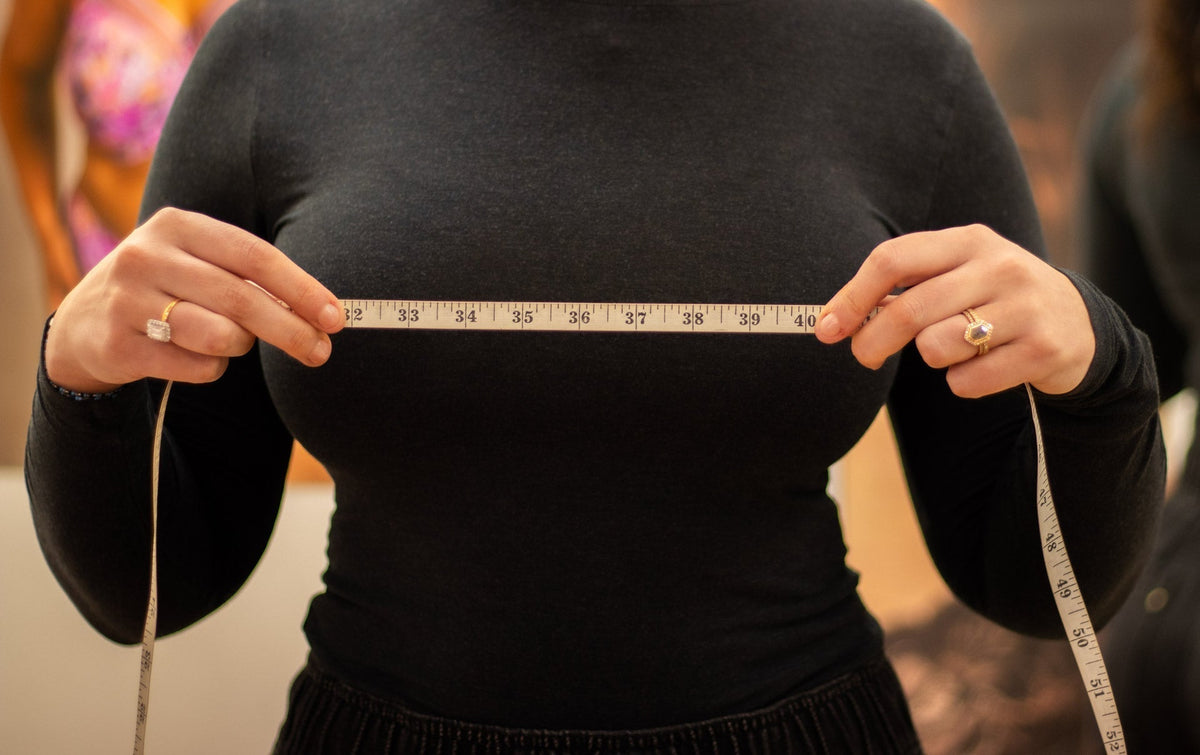
Measurements can be a useful starting point, but they do not tell the whole story.
Breast shape, cup depth, wire width, fabric and the construction of the bra all affect the final fit. That is why I rely much more on how the bra actually sits on the body than I do on a tape measure.
Sometimes I will change the cup size. Sometimes the band. Other times the size may be perfectly fine and the customer simply needs a different style.
Rather than asking, “What bra size am I?”, I think the better question is:
“Which bra fits me best?”

How often should you have a bra fitting?
Ideally, I recommend having your fit checked whenever you buy a new bra, particularly if you are trying a different brand or style. Every bra fits differently, so the size you bought last time may not necessarily be the best size in your next bra.
Realistically, if you buy several bras at once and your weight, body and lifestyle remain fairly consistent, being fitted around once a year is a good guideline. You should consider being refitted sooner after pregnancy, breastfeeding, significant weight changes, surgery or other noticeable changes to your body.
After 43 years of fitting women, my biggest piece of advice is simple: don’t worry about the number or letter on the tag. Focus on how the bra fits and how you feel wearing it.
FAQ
How do bra sizes work in simple terms?
The number represents the band size around your ribcage, while the letter represents cup volume. The two work together, so the same cup letter does not represent the same volume across every band size.
How do I know if my bra fits correctly?
Your bust should be comfortably contained within the cups, the band should feel firm without being painfully tight, and the straps should sit comfortably without digging in. The bra should also give you a supported, flattering shape.
How often should I get fitted for a bra?
Ideally, have your fit checked whenever you purchase a new bra. If your body and lifestyle have not changed significantly, around once a year is a good general guideline.
Why does the same bra size fit differently in different styles?
Different brands and styles use different cup shapes, wire widths, fabrics and levels of stretch. It is completely normal to wear different sizes across different bras.
What are sister sizes in bras?
Sister sizes are bra sizes with similar cup volumes but different band sizes. They can be useful when a particular size is unavailable, but the priority should always be finding the size and style that fits properly.
Is a D cup considered large?
Not necessarily. A D cup on a smaller band has less volume than a D cup on a larger band. Cup letters should not be thought of simply as “small” or “large” - what matters most is the fit.